
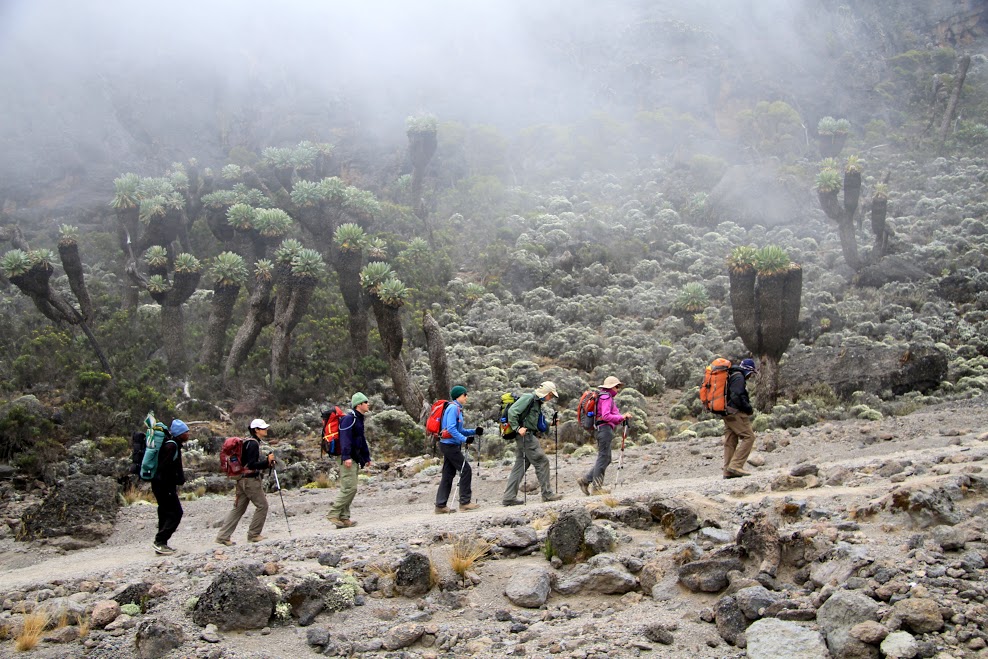
The Lemosho Route is widely regarded as one of the most scenic and least crowded trails to the summit of Mount Kilimanjaro. Starting on the remote western slopes of the mountain, this route offers a beautiful and gradual ascent through a variety of ecosystems—from dense rainforest and giant heather moorlands to sweeping alpine deserts and glacial summit zones.
Upon arrival at Kilimanjaro International Airport, you’ll be met by your driver and transferred to your hotel in Arusha or Moshi. In the evening, you’ll meet your mountain guide for a detailed briefing and gear check. This is your time to ask questions, make final preparations, and rest before the adventure begins.
After breakfast, you’ll drive for a few hours to the Londorossi Gate where registration is completed. From there, a short drive takes you to the trailhead. The trek begins through dense rainforest filled with monkeys, birds, and lush vegetation. After about 3 to 4 hours of hiking, you’ll arrive at Mti Mkubwa Camp for dinner and overnight.
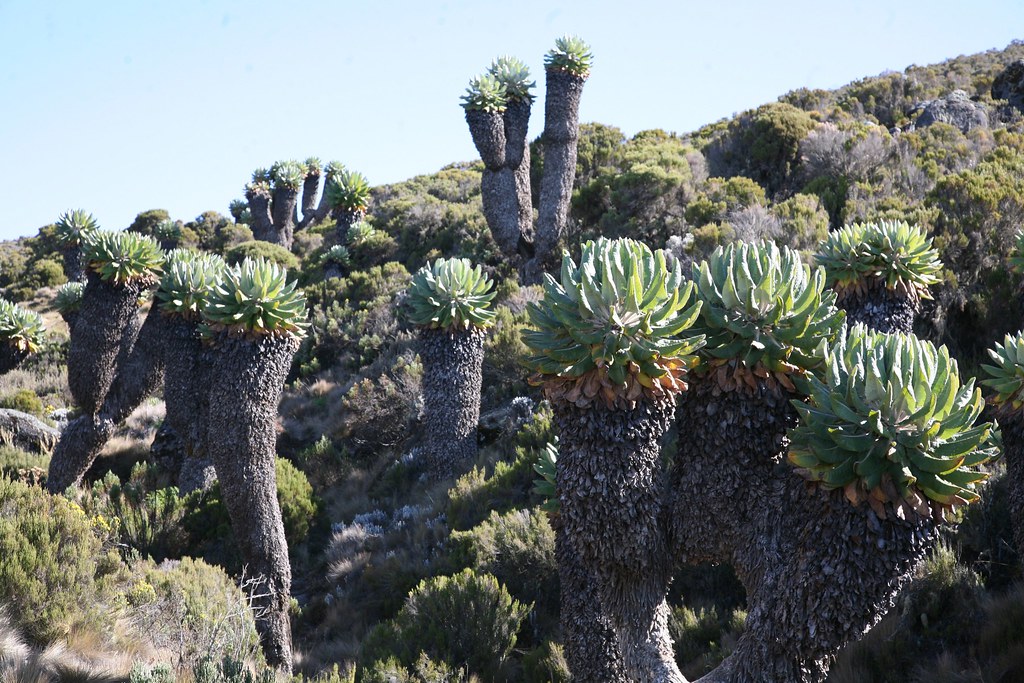
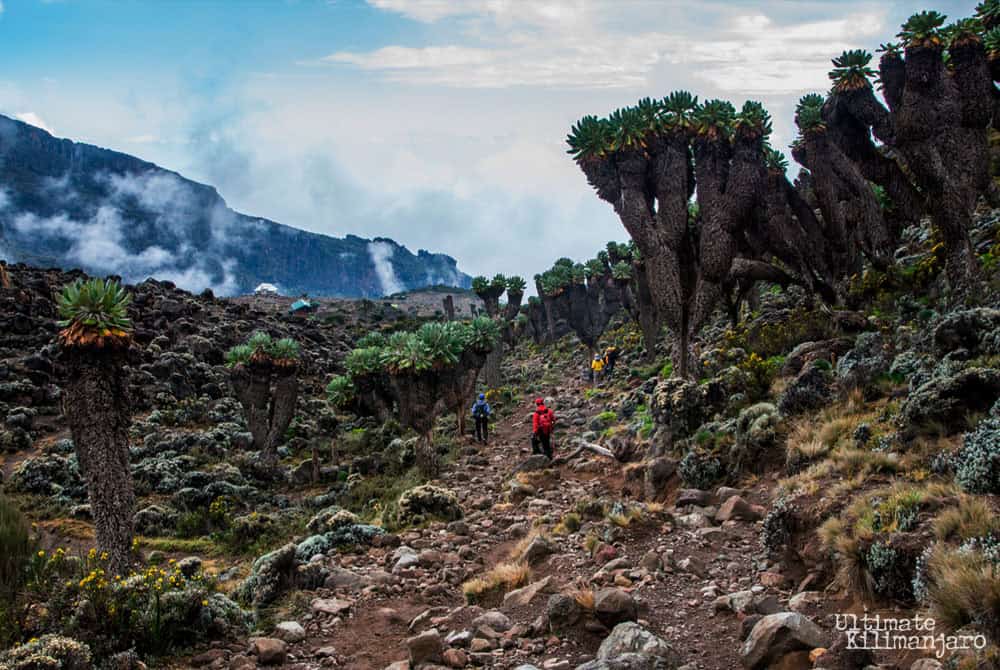
Today’s hike takes you out of the rainforest and into the heather and moorland zone. The trail becomes steeper and more open as you ascend the Shira Ridge and descend slightly into the Shira Plateau. After 5 to 6 hours of trekking, you’ll reach Shira 1 Camp with panoramic views of Mount Meru and the vast plains below.
A relatively easy day of hiking across the rolling Shira Plateau, which was formed by lava flows from the western side of Kilimanjaro. You’ll explore this unique alpine environment and have plenty of time to acclimatize. Camp is set at Shira 2, with stunning sunset views and a chance to rest before the tougher terrain ahead.
Today is all about acclimatization. You’ll ascend gradually to the Lava Tower at 4,630 meters where you’ll stop for lunch. Then you’ll descend to the beautiful Barranco Valley. This route follows the “climb high, sleep low” principle, allowing your body to adjust to the altitude. The day ends at Barranco Camp beneath the towering Barranco Wall.
The day begins with the iconic Barranco Wall, a steep but non-technical climb. With the help of your guides, you’ll scramble your way to the top, rewarded with epic views. Afterward, the trail winds through glacial valleys to Karanga Camp. This shorter trekking day is excellent for acclimatization and rest.
A gradual ascent takes you through alpine desert terrain to Barafu Camp, your base for the summit attempt. You’ll arrive by midday to rest, rehydrate, and fuel up with an early dinner. You’ll sleep early because your summit bid begins before midnight.
Around midnight, you’ll start the final ascent under the stars, moving slowly but steadily toward Stella Point. After a brief rest and encouragement from the team, you’ll push on to Uhuru Peak—the highest point in Africa. The sunrise here is unforgettable. After photos and celebration, you’ll descend back to Barafu for brunch, then continue down to Mweka Camp for your final night on the mountain.
The last leg of the trek is a descent through lush rainforest to Mweka Gate, where you'll check out and receive your summit certificates. A vehicle will be waiting to transfer you back to your hotel for a hot shower, a well-deserved meal, and a celebration of your achievement.
Included in the Trekking Package
- Professional Guides and Crew:
- Experienced, licensed mountain guides, assistant guides, porters, and cooks to ensure your safety and comfort.
- Park Fees and Permits:
- Kilimanjaro National Park entry fees, camping fees, and rescue fees for the duration of the trek.
- Accommodation on the Mountain:
- All camping equipment is provided, including tents, sleeping mats, mess tents, and chairs. (For Marangu route, mountain huts are provided instead of tents.)
- Hotel Accommodation Before and After the Trek:
- 2 nights in a hotel/lodge in Moshi or Arusha, with breakfast included (one night before and one night after the trek).
- Meals on the Mountain:
- Full meals on the trek (breakfast, lunch, dinner, and snacks) prepared by a chef, catering to most dietary requirements (vegetarian, vegan, gluten-free, etc.).
- Drinking Water:
- Clean, treated water will be provided throughout the climb.
- Transportation:
- Private transfers to and from the park gate at Londorossi for the start and end of the trek.
- Safety Equipment:
- A comprehensive first-aid kit, emergency oxygen, and a pulse oximeter for daily health checks.
- Luggage Porters:
- Porters carry up to 15 kg of personal luggage. You only need to carry a daypack with essentials like water, snacks, and a camera.
- Summit Certificate:
- You will receive a certificate upon reaching the summit (Uhuru Peak) or Stella Point, marking your achievement.
Not Included in the Trekking Package
- International Flights:
- Flights to and from Tanzania (Kilimanjaro International Airport) are not included in the package.
- Tanzania Visa Fees:
- The cost of obtaining a visa for Tanzania is the responsibility of the trekker.
- Travel Insurance:
- Travel insurance that covers high-altitude trekking and emergency evacuation is mandatory and not included.
- Personal Gear and Equipment:
- Items like hiking boots, sleeping bags, trekking poles, headlamps, and specific clothing are not included (though available for rent if needed).
- Meals in Moshi/Arusha (except breakfast at the hotel):
- Lunches and dinners before and after the trek are not included unless specified in the itinerary.
- Alcoholic Beverages and Soft Drinks:
- These are not provided on the mountain or at the hotel, though you can purchase drinks at the hotel.
- Optional Tours or Activities:
- Safaris, cultural tours, and other excursions before or after the trek are not included but can be arranged separately.
- Tipping:
- Tipping for the guides, porters, and crew is not included. A recommended tip is $250–$350 per trekker for the entire crew, which will be shared among the team.
Climbing Kilimanjaro is a non-technical trek, meaning no ropes or climbing gear are required. However, it is physically demanding due to the high altitude. Good fitness, determination, and proper acclimatization are key to success.
The Lemosho and Machame routes are the most scenic and offer good acclimatization profiles. Lemosho is less crowded, while Marangu is the only route with hut accommodations. We help choose the best route based on your fitness level, time, and preferences.
The best climbing seasons are January to March and June to October, during Tanzania’s dry periods. These months offer clear skies, great views, and lower rainfall.
No technical climbing experience is needed. Kilimanjaro is a trek, not a technical climb. However, previous hiking experience and being physically fit will help greatly.
You’ll stay in a hotel/lodge before and after the climb. On the mountain, accommodation is in high-quality tents. On the Marangu route, trekkers sleep in shared mountain huts.
You’ll need layered clothing for cold and warm weather, a sleeping bag, hiking boots, walking poles, and other essentials. We provide a full packing list and rental options for key gear.
Yes, due to the elevation. We design our itineraries with proper acclimatization, and our guides monitor your health daily using pulse oximeters. We carry oxygen and have an emergency evacuation plan in place.
Our mountain chefs prepare three nutritious meals daily, with plenty of fluids to help with hydration and energy. We can cater to dietary restrictions with advance notice.
Yes, we strongly recommend insurance that covers high-altitude trekking and emergency evacuation.
Tipping is customary on Kilimanjaro. Guidelines suggest around $250–$300 per climber for the entire trek, which is shared among guides, cooks, and porters. We provide detailed tipping recommendations.
